
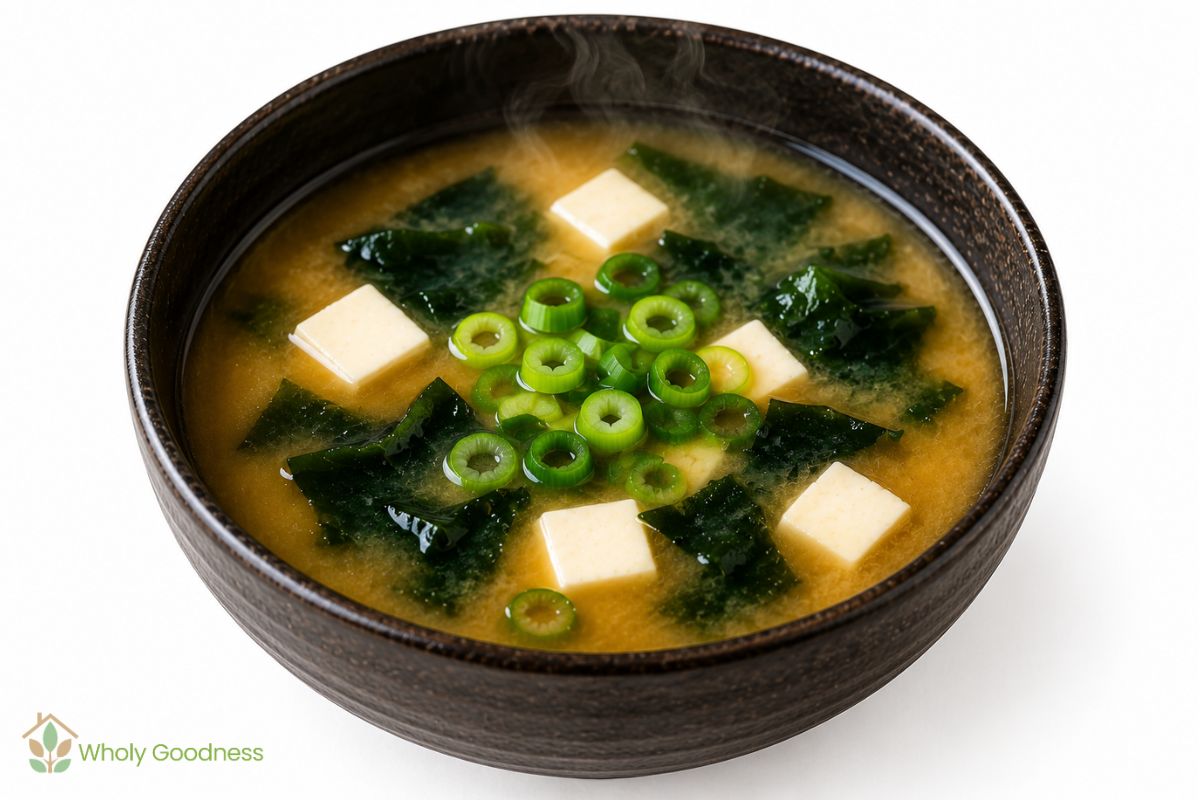
Miso soup is one of the most popular (and delicious) dishes served in Japanese restaurants around the world.
It’s warm, comforting, and packed with umami flavor, making it a favorite alongside sushi, rice dishes, and noodle bowls.
The good news is that miso itself is vegan. However, not every bowl of miso soup is suitable for a vegan diet because traditional recipes often include fish-based stock.
Here’s everything you need to know before ordering or making miso soup.
What Is Miso Soup?
Miso soup is a traditional Japanese soup made with miso paste dissolved into a flavorful broth. Depending on the recipe, it may also contain ingredients such as:
- Tofu
- Wakame seaweed
- Green onions
- Mushrooms
- Daikon radish
- Napa cabbage
While the ingredients added to the soup are usually plant-based, the broth is what determines if it’s vegan.
What Is Miso Made From?
Miso paste is naturally vegan. It is traditionally made by fermenting soybeans with salt and a culture called Aspergillus oryzae, often referred to as koji. Some varieties also include grains such as:
- Rice
- Barley
- Oats
- Millet
The fermentation process can take anywhere from a few weeks to several years, creating the rich, savory flavor that miso is famous for.
Since traditional miso paste contains no animal products, it is considered vegan.
Why Isn’t Every Bowl Of Miso Soup Vegan?
Although the miso paste itself is plant-based, many traditional recipes use dashi as the soup base.
Classic dashi is typically made using:
- Bonito flakes (dried skipjack tuna)
- Kombu (kelp)
Because bonito flakes are made from fish, this type of broth is not vegan or vegetarian.
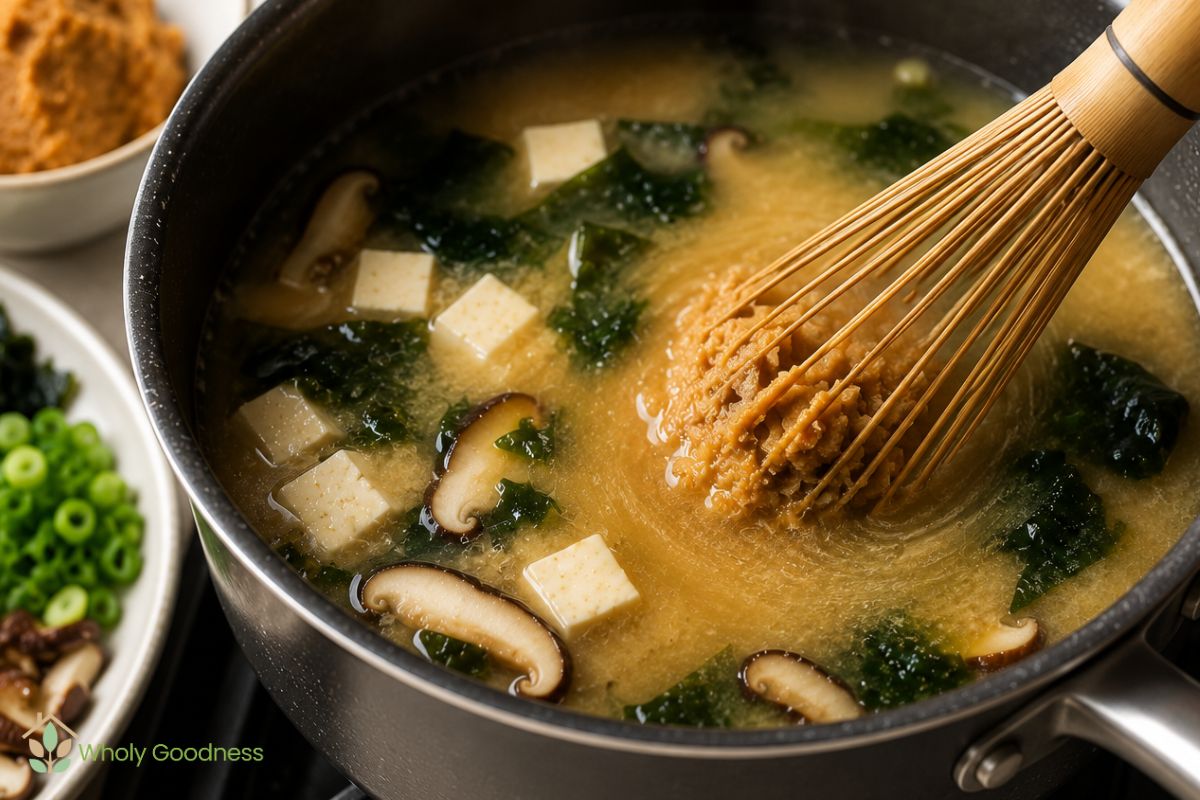
The miso is simply whisked into the prepared dashi, meaning the finished soup contains fish even though the paste does not.
How To Tell If Miso Soup Is Vegan
If you’re eating at a Japanese restaurant, it’s worth asking how the broth is made.
Many restaurants now offer vegan miso soup made with kombu, shiitake mushrooms, or vegetable stock instead of fish-based dashi.
Questions you can ask include:
- Is your miso soup made with bonito dashi?
- Do you have a vegan miso soup?
- Is the broth made with vegetable stock or seaweed?
These simple questions can quickly tell you if the soup is suitable.
Is Instant Miso Soup Vegan?
Some instant miso soups are vegan, while others are not.
Always check the ingredient list for fish-based ingredients such as:
- Bonito
- Fish extract
- Fish powder
- Seafood extract
- Anchovy
Many vegan instant varieties use kombu and mushrooms instead, making them completely plant-based.
Is White, Yellow, Or Red Miso Vegan?
Yes. The color of the miso doesn’t determine whether it’s vegan.
The main varieties include:
- White miso (Shiro miso): Mild, slightly sweet, and fermented for a shorter time.
- Yellow miso (Shinshu miso): Balanced flavor that’s great for everyday cooking.
- Red miso (Aka miso): Richer, saltier, and fermented for much longer.
All three are typically vegan, although it’s always worth checking specialty products for added ingredients.
Final Thoughts
Miso paste is naturally vegan, but miso soup isn’t always. The deciding factor is the broth.
Traditional recipes usually use fish-based dashi, while vegan versions rely on kombu, mushrooms, or vegetable stock instead.
If you’re making miso soup at home, it’s easy to prepare a delicious vegan version using plant-based ingredients.
When eating out, simply ask how the broth is made, and you’ll know if it’s suitable for your diet.
Frequently Asked Questions
Is miso paste always vegan?
Traditional miso paste is usually vegan, as it’s made from fermented soybeans, salt, koji, and sometimes grains such as rice or barley. Always check flavored varieties for added ingredients.
Is miso soup vegetarian?
Not always. Traditional miso soup made with bonito dashi contains fish, so it isn’t vegetarian. Vegetarian versions use vegetable or kombu-based broth instead.
Can vegans eat miso ramen?
Yes, if the broth is vegan. Some ramen restaurants use vegetable or mushroom broths with miso, while others include meat or fish stocks.
Does all Japanese restaurant miso soup contain fish?
Many traditional restaurants use bonito dashi, but an increasing number now offer vegan alternatives. It’s always worth asking before ordering.
Is miso good for your gut?
Miso is a fermented food that contains beneficial compounds created during the fermentation process. Some unpasteurized miso products may contain live microorganisms, but many commercial products are pasteurized, which reduces the number of live cultures. Miso can still be part of a healthy, balanced diet, although it is relatively high in sodium, so it’s best enjoyed in moderation.
Does all miso soup contain fish?
No. Traditional Japanese miso soup is often made with bonito dashi, which contains dried fish and isn’t vegan. However, many homemade recipes and some restaurants use vegetable broth, kombu (kelp), or shiitake mushrooms instead, making the soup completely vegan. If you’re dining out, it’s always worth asking how the broth is prepared.
What is a substitute for miso paste?
If you don’t have miso paste, there isn’t a perfect substitute because of its unique fermented, savory flavor. However, depending on the recipe, you could use:
– Tahini mixed with a little soy sauce
– Soy sauce with a small amount of peanut or almond butter
– White bean paste with soy sauce
– Vegetable bouillon for savory depth
These alternatives won’t taste exactly the same, but they can provide a similar richness in soups, sauces, and marinades. If you need the dish to remain vegan, all of these options are suitable when made with plant-based ingredients.

